Replenishing Your Water Storage
While frequently helping individuals and families set up their emergency drinking water storage, one of the most repeated tips that surfaces is that their water storage should be routinely rotated or replenished within a six to twelve-month period. For many, this comes as an unwelcomed surprise, as if water should just be able to set there for 20 years without any problems!
This brief article offers three points for routinely replenishing existing emergency drinking water storage. It was written for those who already have a basic understanding of sound practices in storing drinking water.

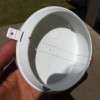
55 Gallon Tamper Proof Lid
Security & Quality
Replenishing your water storage within a six to twelve month period ensures that the integrity of that water remains complete and that no unwanted influences have compromised the container or the immediate storage environment.
Some authors recommend accessing the water itself and simply closing it back up if all appears alright, but I disagree. The second that the stored water is re-introduced to an outside environment such as air, tools, or hands, the potential for contamination is a done-deal. Sterile technique outside of a lab is impossible which is why I recommend using tamper-proof caps after each replenishing session. This ensures a quick visual evaluation of tampering and compromise. Rest assured, if your technique was appropriate while putting the water into storage, routine replenishing and repeated form will ensure continued success. I also recommend writing the date of storage on each tamper-proof cap as a universal reference point.

The quality of the water is always affected by appropriate storage conditions:
- Using appropriate sources of water (U.S. tap water approved for drinking is a minimum)
- Using virgin (new & unused) containers approved for water storage
- Appropriate water preservative considering container & environment
- Proper filling & sealing techniques
- Out of direct sunlight
- Away from exposure to extreme temperatures
For those individuals who would rather add more preservative to the water within the replenishing time-frame, I suggest that you do the following (at your own risk of course):
- Minimize access to outside environments and factors such as winds, dust, chemicals, tools, etc.
- Operate in a clean environment:
- Clean hands, tools, sanitizing solution appropriate for contact with drinking water storage
- Perform a visual inspection of critical areas:
- Caps, gaskets, access points, container, storage location, supports, covers, etc.
- Once you’ve determined that you wanna take a shortcut, clean each critical area before re-storing your water.
Optimize Resources
Replenishing your water storage within a six to twelve month period also ensures that your water, container(s), and tools, are kept in optimum operating conditions. Successful bakers, chefs, mechanics, soldiers, and healthcare practitioners function best when their tools are in ideal shape…the same is true for you and for me.
Optimizing the lifespan of our resources is valuable because it saves us money long-term. I am consistently surprised at would-be home economists who brag about their ability to “prep on the cheap.” I agree that frugality should be practiced but not at the expense of becoming CHEAP! By cheap, I mean the practice spending a little money to buy as many products of inferior quality as possible than in spending more money to buy better or best quality products which likely will not need to be replaced. Those who act cheap cannot appreciate terms such as craftsmanship, lifetime manufacturer warranty, or even conduct real cost analyses! How to conduct a practical cost analysis will be the subject of a separate post.
In order to make the most of your resources, pursue these practices:
- Read the instructions & owner’s manual!
- Understand how to appropriately use your product
- Understand your product’s limitations
- Learn how to maintain your product in ideal operating condition
- Gather information and feedback from others who parallel you & your use of the product
- Contact the dealer/manufacturer for product support
- Establish a routine to maintain your product
Routine of Integrity
Properly maintaining your resources is a fundamental behavior that optimizes the life span of your tools (in this case water), refreshes your operating knowledge base (where & when to access it), and promotes improvisation when access to familiar resources is cut-off (alternative access to water & water filtration/purification). Habit is a synonym for the word routine, and denotes behaviors or customs that develop with repeated application. In this case, the habit or routine of integrity is a function of reviewing your water storage and making adjustments to ensure its optimum availability.
Within the context of establishing a routine, here are some personal steps that I take in my routine:
- Monthly visual inspection
- Routine cleaning of storage area
- Routinely adding to the water storage where possible
- For the last couple of months leading up to replenishment, I use the remaining water or place it into smaller containers for use within an appropriate time-frame.
-David SafeWater

The tragedy in Italy this weekend has definitely shaken many individuals who will be traveling on cruise ships, no doubt. While we are awaiting the causative details of this tragedy, we already know that Captain Francesco Schettino had deviated from the ship’s charted course. Five fatalities are the current count as of this writing, with many more injured amongst the 4,000 passengers and crew. Our thoughts and prayers are with the families of those whose hearts are grief-stricken from this event.
Recently, I read an article on a blogger’s site that mentioned the Berkey® Water Purification and Seychelle® filtration systems, as well as another filtration system. Some points in that article that need clarification, especially since such generalities as stated in that article are lacking in reason and practicality. It is vital for individuals to offer information that is clear and practical, especially to the communities whose interests we share. When critics publicly address the Berkey® Systems, it is only fair to respond in a similar fashion. We hold a vested interest in providing correct information, especially when implications murky the water, directly/indirectly. The bullet points are direct quotes from the article. Our responses follow the bullet points.