Home » water » Recent Articles:

Feeling a Flu Coming?…Check out what I do

I am a generally healthy guy. I hardly ever get sick, but when I do feel a bug trying to set-in, here’s what works for me.

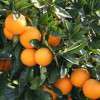
I have a couple of orange trees which produce good size fruit. In my experience, eating freshly picked fruit is much more preferable than eating fruit that has been picked and transported from a non-local source.

One of the keys to my taking this remedy has to do with:

  1. I use this remedy immediately when I feel flu-like symptoms such as a slight body-ache, sudden fatigue, slight temperature, or just plain lousy (everyone should be familiar with how his/her body reacts when the a flu begins to set-in).
  2. I have found it exponentially beneficial to eat the peels along with the oranges, in addition to the oranges used to make the tea.
  3. Generous rest must be part of your preventing severe flu onset!!! If you think you’re getting sick, go to bed early, take it easy, and relax!
  4. I use raw honey along with the tea that I make. It’s awesome.

Here are the simple steps to how I prep my tea.

Materials needed:

  • 3 quart sauce-pan
  • stove-top (or cooking surface to heat the sauce-pan if off grid)
  • ladle
  • mug
  • ~2.5 quarts of drinking water (I use water from my Berkey)
  • 6-8 freshly-cut & healthy oranges (slightly bigger than a baseball)
  • Raw honey
  1. Select the biggest oranges with the healthiest looking peels. Great oranges are fragrant and have a wonderful weight. The orange should be firm, with a slight “squeezability” to it.
  2. I do not tear the orange from it’s stem at the tree. I cut a portion of the stem on which it hangs along with a few leaves (about 4-5 inches of the stem). Once you have gathered a healthy amount of oranges, you will need to wash them previous to eating them and using them for the tea.
  3. Do a good job cleaning the oranges. My orange trees are not sprayed with any pesticides, although some areas and individuals do spray their trees with chemicals. Thankfully, I don’t have to worry about that. A great cleaner that I use with other fruit that might have chemicals on them is Environné. Also be sure to wash the leaves (you can leave the stem attached if you like-no pun intended).
  4. I fill ~2.5 quarts of water into a 3 quart pan with water from my Berkey and bring it to a boil.
  5. While the water is heating up, I peel 4-5 oranges and retain the peels. We’ll place them to boil along with the leaves. A good rule-of-thumb is to use enough orange peels to cover the surface of the water in the pan.
  6. I then eat the peeled oranges. With another 2 un-peeled oranges, I will eat them whole, peel and all after I wash them.
  7. Once the water is boiling, I will place the cleaned leaves and peels in the pan and keep the heat on medium to low. You will know that the peels are done when their color has reduced noticeably and the water has a strong orange-tint to it.
  8. I then pour 2-3 tablespoons of raw honey into a mug and use a measuring cup to transfer the hot water from the pan into the mug. I then stir the mug contents to get a nice mix of the honey and the orange-tea. I let it cool down so it’s comfortably warm- my wife likes drinking it when it is scalding hot.
  9. I then will drink two to three mugs of the tea…then it’s off to get some rest!

This remedy has done wonders to help me and my family and friends!


-The Berkey Guy


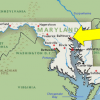
East Baltimore, Maryland: Three Days without Water

Hundreds of residents in the eastern part of Baltimore had to handle three days without water. After what seemed to be fixed, crews had to return to make repairs because water pressure would drop almost immediately after faucets were opened.

The leak was apparently due to old, brittle  pipes that have remained unchanged for many years. Deposits and aging have left the infrastructure weak and vulnerable to damages like cracks. The remedy was to attach a coupling over the compromised area, but only after workers could grind down that section of piping.

While water service was unavailable, residents were able to pick up water at two street locations in rations. After three days of the interruption, service crews were finally able to locate the leak and repair it. Officials informed the public that once they turned their faucets on, they would have to allow the water to run until it lost its dark and cloudy appearance, appearing clear and clean.

reporting credit: Baltimore Sun Online


Button

Burn Treatment by Alan Halcon @ Dirttime.com

The following article’s author, Alan Halcon, published it on February 28, 2011. We are re-posting it with his permission. You may also visit his website: Dirttime.com for other great articles by Alan & his colleagues. Click Here for the original.

The hypnotizing affect of a campfire can be relaxing and comforting, but it can also be dangerous. Many accidents seem to occur around the campfire, be it a scalding burn from hot liquids or a burn from the hot coals or flames. Like any injury, a burn can turn an otherwise fun outing into an emergency event. Consider, also, the inability to get to an emergency care facility due to one being in a remote area.

Burns are classified in four categories, first, second, third, and fourth degree burns. It is important to recognize each one so that proper medical care can be administerd.

First Degree Burn

A first degree burn involves only the epidermis and includes redness and swelling of the skin. A sun burn is a good example of a first degree burn. However, sometimes, what appears to be a first degree burn may actually turn out to be more and becomes apparent after twelve to twenty-four hours. If blisters start to form, more advanced treatment will be necessary, because the potential for infection and scarring.

  1. Begin by cooling the area with cool water for about 10 minutes.
  2. a topical medication containing Aloe is usually all that is needed.
  3. Pain medication may be needed for pain control.

Aloe has antimicrobial properties and is an effective painkiller. An alternative to aloe, when none is present, is prickly pear cactus. It contains the same analgesic effect as that of aloe.

Second Degree Burns

Second degree burns involve burning of the first layer of skin (epidermis) and  second layer of skin (dermis) being burned. Blisters develop and the skin takes on an intensely reddened, splotchy appearance. Second-degree burns produce severe pain and swelling. Second degree burns present a unique problem to the remote area adventurer. The fluid within the blisters provide a rich environment for bacteria and a resulting infection can occur. Typically, medical help would be sought, but in this situation, one may have to rely on their own abilities.

  1. Immediately cool the area with water. For large areas, a wet sheet or cloth should be used
  2. Small blisters should be left intact as a biological dressing. If the small blisters are part of a large burn area, debridement should be considered.
  3. Large blisters should be debrided, but first clean the burn area with soap and water. After debridement, apply a topical burn agent and light dressing
  4. To avoid infection, clean the wound once daily and reapply the topical burn agent followed by dressing. Some environments may require more daily changes
  5. Take over the counter pain medication
  6. observe the victim for shock

Some doctors advocate not changing the dressing daily; however, being in the outdoors puts the wound at risk of infection and therefore needs to be managed and supervised differently.

  • The dressing should cover the entire area. No part of the burned area should be exposed.
  • The burn wound should remain moist.
  • The dressing should be light and not limit the victims ability to flex.
  • frequent flexing prevents the burned skin from tightening and assists with pain control and prevention of edema

Third and Fourth degree burns

There is little one can do for these extreme types of burns without medical help.

  1. first cool the skin with water. For large areas, a wet sheet or cloth should be used
  2. If the area is large, it is extremely critical one be protective against hypothermia. The fact the protective layer of skin protecting against the environment has been burned, puts the victim at severe risk of hypothermia.
  3. Get immediate medical attention.
  4. observe the victim for shock

Do NOT

Under any circumstances do not use butters, oils, or ice as a means to help soothe the burn– Using ice can further damage tissue.

Conclusion

As always, this is not the be all end all in burn management. There are myriad products available for burns such as Telfa and Adaptic. other Dressings such as hydrogels, silver-coated dressings, silicone gel sheets, etc are also available. This is basic burn aid information for those with limited resources.
Button

By Alan Halcon, on December 30th, 2010

Preparedness Mindset Books: Making the Best of Basics: Family Preparedness Handbook

A Preparedness Lifestyle Resource!

Never mind all the scare scenarios. Just close your eyes for a moment and imagine what would happen if you became ill and couldn’t work, or if an earthquake or hurricane or bomb left your community devastated. It happens all the time. When unexpected disasters happen, people who are even a little prepared are much better off than those who have taken their dependence on outside resources for granted. When you imagine the security of not having to worry about going to the store for even a few weeks, a comprehensive storage system begins to make sense.

James Talmage Stevens’s Making the Best of Basics, now in its 12th edition, is one of the best-known preparedness bibles around. Stevens lays out a yearlong storage program of 15 food and nonfood categories, six of which (water, wheat and grains, dairy products, sweeteners, “cooking catalysts” like salt and oil, and sprouting seeds) are capable of sustaining life indefinitely in a no-frills diet. The other 9 categories are designated “Building Blocks,” and improve upon the basic diet and support a more routine, less Spartan existence while relying on stored supplies. (Some of them, such as medical supplies and fuel, will seem as essential to some readers as the first six.) The book’s main messages–store what you eat, eat what you store, use it or lose it–are at the core of its calm advice and simple, nutritious recipes.