Home » Water purification » Recent Articles:

Replenishing Your Water Storage

While frequently helping individuals and families set up their emergency drinking water storage, one of the most repeated tips that surfaces is that their water storage should be routinely rotated or replenished within a six to twelve-month period. For many, this comes as an unwelcomed surprise, as if water should just be able to set there for 20 years without any problems!

This brief article offers three points for routinely replenishing existing emergency drinking water storage. It was written for those who already have a basic understanding of sound practices in storing drinking water.

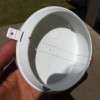
Detail of interior of Tamper Proof Lid

55 Gallon Tamper Proof Lid

Security & Quality

Replenishing your water storage within a six to twelve month period ensures that the integrity of that water remains complete and that no unwanted influences have compromised the container or the immediate storage environment.

Some authors recommend accessing the water itself and simply closing it back up if all appears alright, but I disagree. The second that the stored water is re-introduced to an outside environment such as air, tools, or hands, the potential for contamination is a done-deal. Sterile technique outside of a lab is impossible which is why I recommend using tamper-proof caps after each replenishing session. This ensures a quick visual evaluation of tampering and compromise. Rest assured, if your technique was appropriate while putting the water into storage, routine replenishing and repeated form will ensure continued success. I also recommend writing the date of storage on each tamper-proof cap as a universal reference point.

Tamper Prood Lid with Fill Date

The quality of the water is always affected by appropriate storage conditions:

  • Using appropriate sources of water (U.S. tap water approved for drinking is a minimum)
  • Using virgin (new & unused) containers approved for water storage
  • Appropriate water preservative considering container & environment
  • Proper filling & sealing techniques
  • Out of direct sunlight
  • Away from exposure to extreme temperatures

For those individuals who would rather add more preservative to the water within the replenishing time-frame, I suggest that you do the following (at your own risk of course):

  1. Minimize access to outside environments and factors such as winds, dust, chemicals, tools, etc.
  2. Operate in a clean environment:
    1. Clean hands, tools, sanitizing solution appropriate for contact with drinking water storage
    2. Perform a visual inspection of critical areas:
      1. Caps, gaskets, access points, container, storage location, supports, covers, etc.
      2. Once you’ve determined that you wanna take a shortcut, clean each critical area before re-storing your water.

Optimize Resources

Replenishing your water storage within a six to twelve month period also ensures that your water, container(s), and tools, are kept in optimum operating conditions. Successful bakers, chefs, mechanics, soldiers, and healthcare practitioners function best when their tools are in ideal shape…the same is true for you and for me.

Optimizing the lifespan of our resources is valuable because it saves us money long-term. I am consistently surprised at would-be home economists who brag about their ability to “prep on the cheap.” I agree that frugality should be practiced but not at the expense of becoming CHEAP! By cheap, I mean the practice spending a little money to buy as many products of inferior quality as possible than in spending more money to buy better or best quality products which likely will not need to be replaced. Those who act cheap cannot appreciate terms such as craftsmanship, lifetime manufacturer warranty, or even conduct real cost analyses! How to conduct a practical cost analysis will be the subject of a separate post.

In order to make the most of your resources, pursue these practices:

  • Read the instructions & owner’s manual!
  • Understand how to appropriately use your product
  • Understand your product’s limitations
  • Learn how to maintain your product in ideal operating condition
  • Gather information and feedback from others who parallel you & your use of the product
  • Contact the dealer/manufacturer for product support
  • Establish a routine to maintain your product

Routine of Integrity

Properly maintaining your resources is a fundamental behavior that optimizes the life span of your tools (in this case water), refreshes your operating knowledge base (where & when to access it), and promotes improvisation when access to familiar resources is cut-off (alternative access to water & water filtration/purification). Habit is a synonym for the word routine, and denotes behaviors or customs that develop with repeated application. In this case, the habit or routine of integrity is a function of reviewing your water storage and making adjustments to ensure its optimum availability.

Within the context of establishing a routine, here are some personal steps that I take in my routine:

  • Monthly visual inspection
  • Routine cleaning of storage area
  • Routinely adding to the water storage where possible
  • For the last couple of months leading up to replenishment, I use the remaining water or place it into smaller containers for use within an appropriate time-frame.


-David SafeWater

Cleaning the Waters of Information

Recently, I read an article on a blogger’s site that mentioned the Berkey® Water Purification and Seychelle® filtration systems, as well as another filtration system. Some points in that article that need clarification, especially since such generalities as stated in that article are lacking in reason and practicality. It is vital for individuals to offer information that is clear and practical, especially to the communities whose interests we share. When critics publicly address the Berkey®  Systems, it is only fair to respond in a similar fashion. We hold a vested interest in providing correct information, especially when implications murky the water, directly/indirectly. The bullet points are direct quotes from the article. Our responses follow the bullet points.

  • Having an abundance of water available for future challenges is meaningless without having reliable methods of water filtration for any of that water you’d use…

Personally, I have quite a bit of emergency water on-hand and this statement is a generality that is simply untrue. Having lots of water is not meaningless. Even if you only had pool water available (which should not be used for drinking water), that amount of water is absolutely useful and valuable for other applications such as washing clothes, dishes, rinsing surfaces, etc.

I store my drinking water in 55 gallon containers that are unused. I purchased them new from a wholesaler who buys directly from the manufacturer, Contico. Although I pre-treat the stored water, I know that the water will be safe to drink even if I am unable to use my Berkey® systems to optimize the water.

  • Test results need to identify the initial baseline of invaders before its results can be relied on.

Let’s address bacteria as the author makes specific reference to this in her example. A common misconception held by many individuals is that all bacteria are “bad”. Pathogenic (illness-causing) bacteria and microorganisms are the “invaders” that you want to avoid in your water, food, and simple day-to-day living. The presence of coliform bacteria in your water source is not a fail-safe indicator of pathogens.

Routine testing methods emphasize the testing for indicator rather than pathogenic microbes. In fact, lab testing generally relies on the presence of indicator organisms (organisms whose presence might indicate the presence of pathogenic bacteria as well) to suggest the presence of pathogens. Even so, if the counts of indicator organisms are low, that indicates a low to non-present likelihood of disease-causing bacteria in the sample. By the way, bacteria are usually on the scale of millions and not hundreds.

The author then references her experience with a Berkey® representative and states that he kept referring to the red food coloring test. The manufacturer New Millennium Concepts, Ltd., specifically uses the red food coloring test because of the unique ability of their systems to remove the red color from the water, whereas no other system that compares itself directly with the Berkey® is able to do the same. The red food coloring also assists users to determine whether their Black Berkey® Elements are functioning properly or need replacement.

Berkey® Water Purification Systems have been a well-known brand within this category for more than a decade and have used the term “non-detectable levels” since their start. Lab data has been referenced by the manufacturer for many years now, although many newcomers are just now becoming informed.

  • Avoid any water filtration unit which uses the term “up to” as a part of its marketing and technology content.

Again, an inaccurate reference is made here. Berkey® Systems make specific mention to “pathogenic bacteria, cysts, and parasites” and do so specifically: >99.9999%. The bundling of the Berkey® Systems in with statements of other manufacturers is inaccurate, misrepresentative, and misleading. And for those who have suffered a “miserable recovery from a digestive illness,” please research Louis Pasteur’s words in context to your illness: “Bernard avait raison. Le germ n’est rien, c’est le terrain qui est tout.” Translation from French: “Bernard was correct. The germ is nothing; the terrain is everything.”

  • The filtration and treatment tests must take into consideration the SIZE of the invaders they are attempting to eliminate.

Personally, I like New Millennium’s statement (link paragraph titled “What is the Micron Rating of the Black Berkey® purification elements?”) on this particular point, made a few years ago:

With respect to the micron rating, we do not use or publish a micron rating for the Black Berkey® elements for the following reasons:

There is much confusion with respect to nominal and absolute micron ratings. An absolute micron rating is one that states the maximum pore size expected within an element.  The nominal micron rating is the average pore size within the element. This means that if 90% of the pores are .02 microns and ten percent are 2.0 microns, one could claim the nominal micron rating as 0.2 microns, which would imply that pathogenic bacteria and parasites would be totally removed.  But in reality the bulk of the water would channel through the larger 2-micron pores and thereby allow both bacteria and parasites to pass through. Therefore a nominal micron-rating claim can be very misleading.

With respect to the absolute micron rating, there is also confusion because there are two different standards to determine absolute; in the US the standard is 99.9% removal, but the international standard in 99.99% removal or 10 times greater removal.

Clever marketers of products can use the confusion over the above differences to make product “A” appear to be better than product “B” when product B may be far superior in reality. For example, we used to report an absolute rating using the international standard because we have a large international customer base.  Several years ago we published a rating on our ceramic filters.  A particular company began to publish that our elements were .9 microns whereas theirs were .2 microns. However, our micron rating was based on absolute (international) while theirs was based on a nominal (US) rating.  When tested at Spectrum Labs, it was found that at the 0.2 to 0.3 microns range our filter removed more particulate than the other brand. Unfortunately, many people make their purchasing decisions based on a micron rating that can be legitimately distorted and to a significant degree.

We soon became weary of trying to explain the above to our customers and so we decided not to participate any longer in publishing a micron rating.  Rather, we think an absolute pathogenic bacteria removal rate is a far better gauge because it is far more difficult to abuse.  Based on that criterion, the Black Berkey® elements remove greater than 99.9999999% of pathogenic bacteria such as E.coli. To our knowledge, no other personal filtration element can match that capability. In fact, the Black Berkey® elements are so powerful, they are unique in their ability to mechanically remove red food coloring from water.

  • Sure it cleans the water, but how long do I have to wait?! It’s all about the contact time.

It is no revelation that contact time is one of the key operating principles behind the success of the Black Berkey® Purification Elements! Of course, the proprietary media which is impregnated into the coconut-shell carbon of the Black Elements is also at work in addressing the contaminants, as well as the amount of carbon used in the elements themselves.

We’re definitely looking forward to reading the second part of that author’s post.


-TBG


Featured Post: “EPA Study: Ground Water Contamination “Consistent With” Fracking”

West Virginia’s The State Journal published a story today that you should read and share with others. You might be familiar with news articles discussing the debate on hydraulic fracturing or “fracking.” Fracking is controversial because of the risk it poses to supplies of water. The issue is really that simple.

The trickiest parts for us to decipher in all of these arguments, are tainted by both sides of the spectrum of this debate. On one hand, you have companies such as Chesapeake Energy who promote the practice because of their for-profit existence, citing safe practices and employing subtle and persuasive language. Even

On the opposing hand, you have public organizations and governmental departments such as New York’s Department of Environmental Protection (DEP). I commend them for issuing the following statement on their website, in specific regard to fracking in the Catskill and Delaware watersheds:

This area [Catskill and Delaware watersheds] is also underlain by relatively thick sections of the Marcellus shale that is targeted for natural gas development. Natural gas development at the rates and densities observed in comparable formations will be accompanied by a level of industrial activity and heightened risk of water quality contamination that is inconsistent with the goals and expectations for an unfiltered water supply system. While DEP is mindful of the potential economic opportunity that this represents for the State, hydraulic fracturing poses an unacceptable threat to the unfiltered water supply of nine million New Yorkers and cannot safely be permitted with the New York City watershed.

I strongly urge anyone interested in exploring the issue further to watch the movie by Josh Fox, titled Gasland. (Link will take you to watch the movie trailer).

Do not get lost in the debate that the Executive Director, Nicholas “Corky” DeMarco, of West Virginia Oil and Natural Gas Association offers on the matter. He follows in the same pattern that other execs display in representing their companies. They seek to divert attention and distract from the primary issues which are evident in the data presented against them. For example, DeMarco defers to a colleague’s comments in order to cast doubt on the credibility of contamination:

“He said they don’t have aquifers, they have pockets where water collects…Here in the Kanawha Valley, everybody’s well is generally in the same aquifer.  His explanation to me was that there, water pools up in pockets rather than in one formation that might go on for miles and miles and miles. Wells could be in totally different pockets.”

Furthermore, similar statements calculated to discredit the EPA’s findings were mentioned by Encana Oil and Gas. Please take the time to visit and read Pam Kasey’s article, available by clicking HERE.


-TBG

East Baltimore, Maryland: Three Days without Water

Hundreds of residents in the eastern part of Baltimore had to handle three days without water. After what seemed to be fixed, crews had to return to make repairs because water pressure would drop almost immediately after faucets were opened.

The leak was apparently due to old, brittle  pipes that have remained unchanged for many years. Deposits and aging have left the infrastructure weak and vulnerable to damages like cracks. The remedy was to attach a coupling over the compromised area, but only after workers could grind down that section of piping.

While water service was unavailable, residents were able to pick up water at two street locations in rations. After three days of the interruption, service crews were finally able to locate the leak and repair it. Officials informed the public that once they turned their faucets on, they would have to allow the water to run until it lost its dark and cloudy appearance, appearing clear and clean.

reporting credit: Baltimore Sun Online


Button

Water Purification Systems

June 14, 2011 Uncategorized No Comments

Benefits of Water Purification Systems

In a world where there is very little trust, water purification becomes a very important issue. Because there’s such potential for contaminants in our daily water supplies, we need to be extra vigilant when it comes to purifying it. This is where water purifications come in. They act to protect us from chemicals, additives and other undesirable elements in our water supply, ensuring that we can protect our families and not endanger them from a simple glass of water.

Buying Water Purification Systems

So where do you find water purification systems that you can trust? Directive 21 is an authorized dealer of the Berkey water filtration system. They’ve been selling this trusted name in filtration for over six years now and completely throw their name behind their products. The Berkey system is unique because it uses patented technology to slow down the process of filtration, giving you purer water every time. For more on the Berkey system and Directive 21, check out their website online at http://www.directive21.com/.


Water Purification

June 13, 2011 Uncategorized No Comments

Basics of Water Purification

We all know that water purification is the process by which unwanted chemicals, additives and other elements are removed from water. Most purification is done to make water safe for drinking or human consumption, but there are other reasons to purify water. Standards for purified water are generally set by some form of government body, but it’s not possible to tell if water is up to those standards just by looking at it. Some chemicals and additives are invisible to the naked eye.

Using Effective Water Purification Products

This is where Directive 21 and the Berkey filtration system come in. While other purification systems offer audacious claims, Berkey delivers results. As an official dealer of the Berkey water purification product line for six years, Directive 21 knows what’s important. For more information on Berkey products and the Directive 21 vision, check out their handy website online at http://www.directive21.com/.


Big Berkey

June 8, 2011 Uncategorized No Comments

What is the Big Berkey System?

There are a host of water filtration systems on the market, many of which aren’t worth the paper-thin material they’re made of. The Big Berkey System, though, is a difference-maker. Why? Power is a good place to start. This bad boy is ideal for use at home with small or medium-sized families because it purifies both treated and untreated water. It even filters streams, stagnant ponds and other water sources that you may not have thought of.

Inside the Big Berkey System

The Big Berkey System gets rid of pathogenic bacteria, parasites and cysts. It kicks out harmful chemicals, like organic solvents and herbicides. It reduces the presence of nitrates, lead, mercury, copper, and a mass of other harmful minerals. The big system has two purification elements and a storage capacity of about 2.25 gallons. It can purify up to three and a half gallons per hour and can be expanded to utilize a total of four purification elements. For more information, check out the website online at http://www.directive21.com/.


Bullets and Beans: Consideration of Priority & Being Practical

Facts & motives are powerful catalysts to action and must be weighted in moderation.

Over the years, customers call in and ask some interesting questions. An infrequent question recently surfaced when I had a conversation with an individual who decided to pick my brain about almost all-things-preparation. To paraphrase her question, she asked, “I have a 72 hour kit and because I live in [in a densely populated U.S. metropolis] I think I really need a gun…what do you recommend?” Here are some of our thoughts with respect to setting priority in steps toward greater self-reliance. My recommendations can be summed up in one word: Practicality.

It is too easy to get side-tracked in our preps when there are so many areas that seem appealing and meritorious of highest priority status. Newbies and old-timers alike can easily find themselves concentrating in many areas of detail such as:

  • Should I raise a Barnevelder or Brahma variety of chickens?
  • Should I start off with a handgun, rifle, or shotgun?
  • What are the criteria I should employ in choosing a brand of colloidal silver?

To avoid this analysis-paralysis one must remain focused and concentrate on building the basics. There is the idea of utilitarianism which essentially declares: do the greatest amount of good for the greatest amount of people. In the particular case of the individual I spoke with, what was most practical for her and that which would accomplish the greatest good was working on her food and water storages. She, like many, was lacking in her practical preps. In her mind, she was most concerned about the first 72 hours post-incident. She anticipated that those 72 hours might require the use of a firearm for protection from looters and vandals. Indeed, I don’t discredit the manifest potential of her scenario, but ultimately, bullets aren’t beans. In other words, hydration, energy, & nutrition are life-sustaining priorities that will provide the stability and foundation, upon which she can progress to personal/group safety considerations.

I know an individual who is intent upon improving his marksmanship in close-quarter combat as well as “reaching out to touch someone.” No problem. Range time is fun. However,he has no medical preparations, horrible social skills, and lives in a crowded apartment building. For him, one practical need is to become more sociable and learn to interact with others, so he can create & strengthen his support network. The support network is the second-point of emphasis that I shared with my friend during our conversation. It is completely do-able and necessary for individuals to strengthen ties & relationships with trusted & like-minded individuals whose interests are shared. While you are building your supplies and hardware inventories and learning self-reliant skills, specialization in interpersonal communication and conflict resolution/negotiations is an ability that is priceless. It can be learned and improved upon no matter your degree of experience and comfort level. Individuals who develop these skills are able to understand human behavior much better and are in a powerful position to act appropriately with/without weapons training & availability.

Beans represent food.

In the interest of time & to keep this post short, I offer this summary. Bullets (security measures) prove valuable in hunting, defense, and offense. Beans (food) sustain life and are the fuel to simple survival and being able to weather the storm during a sustained power outage. Get your beans & then your bullets, or get them both together.

-The Berkey Guy

Please share your thoughts & feedback in our comments section below. Also, feel free to Like Us on Facebook, Follow Us on Twitter, and share your thoughts on the blog.


Water Purification Systems

It seems natural disasters are commanding the headlines more and more these days, and one message comes through loud and clear: it is critical for your family’s safety and well being that you are prepared in the event of flood, fire, earthquake, or any of the other challenges Mother Nature likes to throw our way.  While the importance of clean water is generally understood, many people don’t realize how hard it can be to get access to potable water in the wake of a disaster.  Water purification systems such as those from Directive21 can provide a source of clean, safe drinking water, even when water pressure and electricity are not available.

To be effective in an emergency, a water purification system should be compact, rugged, and easy to use.  A system meant for emergency use should be scaled according to your needs – one that can provide enough drinking water for your entire family is important.  At Directive21.com, we have water purification systems with 2 and 4 elements.  A 2 element system can process over 4 gallons of water per hour, providing clean safe water for everyone in your household.

Button

Water Purification

May 26, 2011 Uncategorized No Comments

Berkey Light Water Filters and Water Purification

In combining the process of micro-porous filtration with the best in modern technology, Berkey’s light water filters add magic to the water purification process. Purification systems from Berkey are able to remove bacteria, parasites and even cysts from water supplies while taking out harmful chemicals and other sorts of additives at the same time. Heavy metals like copper, lead and mercury are also extracted from the water thanks to Berkey’s state of the art approach to purification.

Experience the Berkey Water Purification Difference

There are a number of water purification systems on the market. You can’t go anywhere without running into some sort of gimmick that promises to extract the highest percentage of chemicals or additives to give you a pure glass of water. How do you know which products are worth it and which ones aren’t? With Berkey water purification, the difference is in the systematic approach to the process. For more information on the Berkey difference, visit the website online at http://www.directive21.com/.