Home » dehydrated » Recent Articles:

Replenishing Your Water Storage

While frequently helping individuals and families set up their emergency drinking water storage, one of the most repeated tips that surfaces is that their water storage should be routinely rotated or replenished within a six to twelve-month period. For many, this comes as an unwelcomed surprise, as if water should just be able to set there for 20 years without any problems!

This brief article offers three points for routinely replenishing existing emergency drinking water storage. It was written for those who already have a basic understanding of sound practices in storing drinking water.

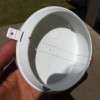
Detail of interior of Tamper Proof Lid

55 Gallon Tamper Proof Lid

Security & Quality

Replenishing your water storage within a six to twelve month period ensures that the integrity of that water remains complete and that no unwanted influences have compromised the container or the immediate storage environment.

Some authors recommend accessing the water itself and simply closing it back up if all appears alright, but I disagree. The second that the stored water is re-introduced to an outside environment such as air, tools, or hands, the potential for contamination is a done-deal. Sterile technique outside of a lab is impossible which is why I recommend using tamper-proof caps after each replenishing session. This ensures a quick visual evaluation of tampering and compromise. Rest assured, if your technique was appropriate while putting the water into storage, routine replenishing and repeated form will ensure continued success. I also recommend writing the date of storage on each tamper-proof cap as a universal reference point.

Tamper Prood Lid with Fill Date

The quality of the water is always affected by appropriate storage conditions:

  • Using appropriate sources of water (U.S. tap water approved for drinking is a minimum)
  • Using virgin (new & unused) containers approved for water storage
  • Appropriate water preservative considering container & environment
  • Proper filling & sealing techniques
  • Out of direct sunlight
  • Away from exposure to extreme temperatures

For those individuals who would rather add more preservative to the water within the replenishing time-frame, I suggest that you do the following (at your own risk of course):

  1. Minimize access to outside environments and factors such as winds, dust, chemicals, tools, etc.
  2. Operate in a clean environment:
    1. Clean hands, tools, sanitizing solution appropriate for contact with drinking water storage
    2. Perform a visual inspection of critical areas:
      1. Caps, gaskets, access points, container, storage location, supports, covers, etc.
      2. Once you’ve determined that you wanna take a shortcut, clean each critical area before re-storing your water.

Optimize Resources

Replenishing your water storage within a six to twelve month period also ensures that your water, container(s), and tools, are kept in optimum operating conditions. Successful bakers, chefs, mechanics, soldiers, and healthcare practitioners function best when their tools are in ideal shape…the same is true for you and for me.

Optimizing the lifespan of our resources is valuable because it saves us money long-term. I am consistently surprised at would-be home economists who brag about their ability to “prep on the cheap.” I agree that frugality should be practiced but not at the expense of becoming CHEAP! By cheap, I mean the practice spending a little money to buy as many products of inferior quality as possible than in spending more money to buy better or best quality products which likely will not need to be replaced. Those who act cheap cannot appreciate terms such as craftsmanship, lifetime manufacturer warranty, or even conduct real cost analyses! How to conduct a practical cost analysis will be the subject of a separate post.

In order to make the most of your resources, pursue these practices:

  • Read the instructions & owner’s manual!
  • Understand how to appropriately use your product
  • Understand your product’s limitations
  • Learn how to maintain your product in ideal operating condition
  • Gather information and feedback from others who parallel you & your use of the product
  • Contact the dealer/manufacturer for product support
  • Establish a routine to maintain your product

Routine of Integrity

Properly maintaining your resources is a fundamental behavior that optimizes the life span of your tools (in this case water), refreshes your operating knowledge base (where & when to access it), and promotes improvisation when access to familiar resources is cut-off (alternative access to water & water filtration/purification). Habit is a synonym for the word routine, and denotes behaviors or customs that develop with repeated application. In this case, the habit or routine of integrity is a function of reviewing your water storage and making adjustments to ensure its optimum availability.

Within the context of establishing a routine, here are some personal steps that I take in my routine:

  • Monthly visual inspection
  • Routine cleaning of storage area
  • Routinely adding to the water storage where possible
  • For the last couple of months leading up to replenishment, I use the remaining water or place it into smaller containers for use within an appropriate time-frame.


-David SafeWater

Cleaning the Waters of Information

Recently, I read an article on a blogger’s site that mentioned the Berkey® Water Purification and Seychelle® filtration systems, as well as another filtration system. Some points in that article that need clarification, especially since such generalities as stated in that article are lacking in reason and practicality. It is vital for individuals to offer information that is clear and practical, especially to the communities whose interests we share. When critics publicly address the Berkey®  Systems, it is only fair to respond in a similar fashion. We hold a vested interest in providing correct information, especially when implications murky the water, directly/indirectly. The bullet points are direct quotes from the article. Our responses follow the bullet points.

  • Having an abundance of water available for future challenges is meaningless without having reliable methods of water filtration for any of that water you’d use…

Personally, I have quite a bit of emergency water on-hand and this statement is a generality that is simply untrue. Having lots of water is not meaningless. Even if you only had pool water available (which should not be used for drinking water), that amount of water is absolutely useful and valuable for other applications such as washing clothes, dishes, rinsing surfaces, etc.

I store my drinking water in 55 gallon containers that are unused. I purchased them new from a wholesaler who buys directly from the manufacturer, Contico. Although I pre-treat the stored water, I know that the water will be safe to drink even if I am unable to use my Berkey® systems to optimize the water.

  • Test results need to identify the initial baseline of invaders before its results can be relied on.

Let’s address bacteria as the author makes specific reference to this in her example. A common misconception held by many individuals is that all bacteria are “bad”. Pathogenic (illness-causing) bacteria and microorganisms are the “invaders” that you want to avoid in your water, food, and simple day-to-day living. The presence of coliform bacteria in your water source is not a fail-safe indicator of pathogens.

Routine testing methods emphasize the testing for indicator rather than pathogenic microbes. In fact, lab testing generally relies on the presence of indicator organisms (organisms whose presence might indicate the presence of pathogenic bacteria as well) to suggest the presence of pathogens. Even so, if the counts of indicator organisms are low, that indicates a low to non-present likelihood of disease-causing bacteria in the sample. By the way, bacteria are usually on the scale of millions and not hundreds.

The author then references her experience with a Berkey® representative and states that he kept referring to the red food coloring test. The manufacturer New Millennium Concepts, Ltd., specifically uses the red food coloring test because of the unique ability of their systems to remove the red color from the water, whereas no other system that compares itself directly with the Berkey® is able to do the same. The red food coloring also assists users to determine whether their Black Berkey® Elements are functioning properly or need replacement.

Berkey® Water Purification Systems have been a well-known brand within this category for more than a decade and have used the term “non-detectable levels” since their start. Lab data has been referenced by the manufacturer for many years now, although many newcomers are just now becoming informed.

  • Avoid any water filtration unit which uses the term “up to” as a part of its marketing and technology content.

Again, an inaccurate reference is made here. Berkey® Systems make specific mention to “pathogenic bacteria, cysts, and parasites” and do so specifically: >99.9999%. The bundling of the Berkey® Systems in with statements of other manufacturers is inaccurate, misrepresentative, and misleading. And for those who have suffered a “miserable recovery from a digestive illness,” please research Louis Pasteur’s words in context to your illness: “Bernard avait raison. Le germ n’est rien, c’est le terrain qui est tout.” Translation from French: “Bernard was correct. The germ is nothing; the terrain is everything.”

  • The filtration and treatment tests must take into consideration the SIZE of the invaders they are attempting to eliminate.

Personally, I like New Millennium’s statement (link paragraph titled “What is the Micron Rating of the Black Berkey® purification elements?”) on this particular point, made a few years ago:

With respect to the micron rating, we do not use or publish a micron rating for the Black Berkey® elements for the following reasons:

There is much confusion with respect to nominal and absolute micron ratings. An absolute micron rating is one that states the maximum pore size expected within an element.  The nominal micron rating is the average pore size within the element. This means that if 90% of the pores are .02 microns and ten percent are 2.0 microns, one could claim the nominal micron rating as 0.2 microns, which would imply that pathogenic bacteria and parasites would be totally removed.  But in reality the bulk of the water would channel through the larger 2-micron pores and thereby allow both bacteria and parasites to pass through. Therefore a nominal micron-rating claim can be very misleading.

With respect to the absolute micron rating, there is also confusion because there are two different standards to determine absolute; in the US the standard is 99.9% removal, but the international standard in 99.99% removal or 10 times greater removal.

Clever marketers of products can use the confusion over the above differences to make product “A” appear to be better than product “B” when product B may be far superior in reality. For example, we used to report an absolute rating using the international standard because we have a large international customer base.  Several years ago we published a rating on our ceramic filters.  A particular company began to publish that our elements were .9 microns whereas theirs were .2 microns. However, our micron rating was based on absolute (international) while theirs was based on a nominal (US) rating.  When tested at Spectrum Labs, it was found that at the 0.2 to 0.3 microns range our filter removed more particulate than the other brand. Unfortunately, many people make their purchasing decisions based on a micron rating that can be legitimately distorted and to a significant degree.

We soon became weary of trying to explain the above to our customers and so we decided not to participate any longer in publishing a micron rating.  Rather, we think an absolute pathogenic bacteria removal rate is a far better gauge because it is far more difficult to abuse.  Based on that criterion, the Black Berkey® elements remove greater than 99.9999999% of pathogenic bacteria such as E.coli. To our knowledge, no other personal filtration element can match that capability. In fact, the Black Berkey® elements are so powerful, they are unique in their ability to mechanically remove red food coloring from water.

  • Sure it cleans the water, but how long do I have to wait?! It’s all about the contact time.

It is no revelation that contact time is one of the key operating principles behind the success of the Black Berkey® Purification Elements! Of course, the proprietary media which is impregnated into the coconut-shell carbon of the Black Elements is also at work in addressing the contaminants, as well as the amount of carbon used in the elements themselves.

We’re definitely looking forward to reading the second part of that author’s post.


-TBG


A Personal Lesson on Preparedness

I participated in the Boy Scout program when I was a teenager and enjoyed many experiences in that program. Of course, we camped out alot and played tons of Capture the Flag. I also had a few experiences which underscored the value of preparing for the unknown, especially unanticipated severe weather.

One particular troop outing comes to mind. In all my preparation before the event I had momentarily considered packing some gear other than the light snow gear I had in my pack. I did not take my wool gloves because I didn’t think they’d be necessary. Boy was I wrong. I was also wrong about carrying less food because I wanted a lighter pack.

Fog

photo credit: georgeruns

The day came that we arrived at our drop-off point and began our hike through the valley and up the mountains. Almost 4-6 hours into our hike, the winds began to pick up and and the temperature began to drop. It was no later than 2 pm but the visibility was cut because of a haze forming. Within 20 minutes the weather completely darkened, bringing with it torrential rain. For a large portion of those 20 minutes we could not decide if we should continue up the trail in hopes of finding a good location for shelter, or if we should bunker down where we were. It turned out that we wasted critical time because of indecision. By the time we could proceed no further, we were already wet, winds were moving fast, and we were somewhat disoriented. We frantically labored to throw up our tents but the winds seemed to mock our efforts.

Eventually, we were able to shelter ourselves but the storm continued to pound upon us as we shifted gear inside the tents, working to prevent the walls from bearing down upon us. My buddy and I began eating some of our foods because our frantic energy expenditures had left us shaking for warmth. It is now clear that our bodies were following their natural inclination to create warmth by muscle spasms. Such shaking was taking its toll on our ATP and so food was necessary to replenish our energy levels.

I had successfully changed into dry clothes although the inside of my tent was a bit wet. I can still recall that my hands began to itch and my fingers ached terribly. The storm continued to rage on beyond 6 pm, although one might have guessed that it was already midnight. We were stuck.

Two more hours passed. It was now 8 pm and the storm continued its menacing fury. My hands still hurt and nothing seemed to provide enough warmth. I remember thinking to myself that I was possibly experiencing frostnip. The redness in their color had changed to a hint of purple and the fine motor control of my fingers was concerning to me. I recall that at some point, I had held a very hot cup of hot chocolate in my hands and was unable to feel the heat. I don’t remember how I stopped holding the cup because I should have sustained a burn from its heat.

***

Our group endured the freezing rain and at the first sign of light in the morning, one of our leaders hiked out to the ranger’s location to radio for rescue. A few hours later a SAR team arrived and helped us make it back to safety, outside of the storm which continued over the next couple of days.

I can still recall how grateful I was to smell  the Egg McMuffins and hash browns that were awaiting us in the vehicles there to pick us up. After brief medical check-ups by the medics there, we headed back home with a story to share with our families.

That experience gave me the practical knowledge that having a lighter pack is not always the wisest solution, especially at the expense of adequate preparedness. I also learned that I should follow my adventurer’s gut instincts a little better. I should have taken my wool sniper gloves with me which would have helped in retaining heat, although the wool would have been wet.

In another post, I’ll share my experience in the Sierra Nevada mountains with a friend’s exposure to hypothermia. He shouldn’t have tried walking on that frozen lake. He nearly died.


Featured SnoMan Article: 1-Day Emergency Plan

The following article is featured from our friend SnoMan @ SurvivalNewsOnline.com. Enjoy!

You can be ready for emergencies in just one day

I know tons of people who haven’t prepped because they have big plans and just can’t seem to get started. If you’re one of those people, this plan is for you. Follow these 10 easy steps to get ready for an ice storm, a blackout, or an economic meltdown. Just a few hours’ work can make the difference between life and death.

This is not by any means a complete survival plan — it’s just a list of items that will get you more prepared than you would be if you do nothing. This plan is designed to get you prepped today, because you never know what might happen, or when. So it’s quick, easy, and cheap.

Most of these items can be found at Wal-Mart, Sam’s Club, or Costco. Feel free to make adjustments as necessary, depending on your circumstances. Like, if you have a year-round spring, stocking water jugs might not be your top priority, and if you have a large family, maybe increase the quantities. (Incidentally, these items are not necessarily in order of importance).

  1. Buy 3 to 5 six-gallon water jugs and fill them as soon as you get home. You can find these in the sporting goods section.
  2. Get 20 lbs each of beans and rice. You can get detailed about your food stock later (how to build up a one year food supply). Right now, we’re just getting you some basic food so you don’t starve.
  3. Canned fruits and vegetables. Just get 20 cans of each, and make sure you’re buying stuff you’ll be happy to eat.
  4. Canned meat and fish. Get 20 cans of Spam, tuna, salmon, jack mackerel, beef stew, or any combination of these.
  5. Chocolate and peanut butter. They store well, they provide tons of calories, and they’re great for morale. Get about 5 lbs of peanut butter and a couple or 3 lbs of chocolate.
  6. Multivitamin supplement. You should have several hundred doses — say, a year’s supply.
  7. Ammo. Make sure you have a few hundred rounds for your primary defensive weapon (I don’t know… 200 to 500, maybe?), and 50 to 100 rounds for your primary hunting weapon.
  8. Flashlight and batteries. LED flashlights use less power, so they last longer. Also, candles and lighters.
  9. Firewood. Just get a pickup load and have it on hand. You can cut more later, but you need some right now. If you don’t have a fireplace or wood stove, get a kerosene or propane space heater — and fuel, of course.
  10. Battery-powered radio. When you get home, tape a new pack of batteries to the radio, then stow the lot with your emergency supplies.

Print this off, go to the store, and be ready for 2012.

~SnoMan

East Baltimore, Maryland: Three Days without Water

Hundreds of residents in the eastern part of Baltimore had to handle three days without water. After what seemed to be fixed, crews had to return to make repairs because water pressure would drop almost immediately after faucets were opened.

The leak was apparently due to old, brittle  pipes that have remained unchanged for many years. Deposits and aging have left the infrastructure weak and vulnerable to damages like cracks. The remedy was to attach a coupling over the compromised area, but only after workers could grind down that section of piping.

While water service was unavailable, residents were able to pick up water at two street locations in rations. After three days of the interruption, service crews were finally able to locate the leak and repair it. Officials informed the public that once they turned their faucets on, they would have to allow the water to run until it lost its dark and cloudy appearance, appearing clear and clean.

reporting credit: Baltimore Sun Online


Button

Floridians Still Dealing with Toxic Algae

Similer Toxic Algae was found in Northern California.

Apparently, clean drinking water is not as readily available as many assume. You know, we regularly receive orders and phone calls from Florida residents because their water is less than desirable. The image to the left is an example of toxic algae that was found in the water at the Iron Gate Reservoir, about 5 miles south of the Oregon-California border.

If you get a chance, please read the article posted today an attorney at Earthjustice. The original article can be found here: Nauseating Toxica Algae Outbreak a Grim Reminder.

It might surprise many Americans to know that even within our great nation clean water is not enjoyed by all, even within established cities and towns. It is very, very disappointing. It is readily assumed that all the taxes that we pay would naturally support infrastructure to secure WATER!

So, aside from the fact that a Berkey System would come in handy here, we all have a vested interest to be informed of our local water supplies and the quality of the water they produce for our consumption. I am not suggesting that you need to become a regular at town/city hall meetings, but what would it hurt to get involved?

Seriously, one of the biggest motivating factors to change comes from us: regular tax-paying citizens who won’t accept sub-par performance from elected officials and public service providers. Our political persuasions do not matter. Our views on the 2nd amendment don’t come into play when we-as communities-collaborate to ensure we have clean, readily-accessible water from our water utilities.


Please do your part. For yourself. For the Future.

-The Berkey Guy

Welcome to The Berkey Guy’s Blog!

I’d like to extend a cordial welcome to you! We look forward to providing you with great information to help you on your way to achieving greater self-reliance and peace. Please subscribe to our RSS feed and you will automatically receive updates as we make content available here. By subscribing, you will also receive a free subscription to the The Berkey Guy Newsletter, sent out twice a month. Our newsletter contains special offers that we only provide to our subscribers. And as always, your email and contact information remains safe with us and nobody else. We will never sell, trade, grant access or provide your information to anyone. Period.

You will notice many exciting things in the months to come, so stay tuned and please feel free to offer your comments here, Like Us on Facebook, Follow Us on Twitter, and Visit Us on Youtube!

If you would like to submit an original article or would like to see an article about a particular subject, please email us & let us know @:   blogarticle@directive21.com.


Thanks,

The Berkey Guy

Water Purification Systems

It seems natural disasters are commanding the headlines more and more these days, and one message comes through loud and clear: it is critical for your family’s safety and well being that you are prepared in the event of flood, fire, earthquake, or any of the other challenges Mother Nature likes to throw our way.  While the importance of clean water is generally understood, many people don’t realize how hard it can be to get access to potable water in the wake of a disaster.  Water purification systems such as those from Directive21 can provide a source of clean, safe drinking water, even when water pressure and electricity are not available.

To be effective in an emergency, a water purification system should be compact, rugged, and easy to use.  A system meant for emergency use should be scaled according to your needs – one that can provide enough drinking water for your entire family is important.  At Directive21.com, we have water purification systems with 2 and 4 elements.  A 2 element system can process over 4 gallons of water per hour, providing clean safe water for everyone in your household.

Button

Critical Thinking: 4 Food Storage Principles

Well, whatever the reason behind your interest in food storage, make sure to follow these four basic principles for storing food short-term & long-term: S.A.V.E.

  1. Store foods that you like & eat regularly.
  2. Add fresh fruits, vegetables, meats, if possible.
  3. Variety of food choices within your storage enhances the experience of using it.
  4. Educate & Evaluate the specific needs you/your family has in terms of nutritional intake needs (calories, carbs, vitamins, essential fats/oils, sugars, etc.), potential dietary restrictions/allergies/intolerances, preferences, and other factors unique to your situation.

#1 Store foods that you like & Eat regularly.

This is good eatin'!

In-N-Out Double Double Animal Style

I wonder if an In-N-Out Double Double could be dehydrated or freeze-dried for long term storage? But seriously, so many families bulk up on wheat, beans, rice, and oatmeal, thinking that they will magically concoct recipes without having previously practiced and perfected cooking from scratch! Do not make this mistake. You should only store those foods that you will enjoy eating and that you are familiar with before having to consume them. This point dove-tails with #3, but onto point #2.

#2 Add fresh fruits, vegetables, meats, if possible.

Another mistake many make is to plan using their dehydrated/freeze-dried food as their primary source of the body’s energy & nutrients. Although high-quality food storage will possess properties of nutrition and taste good, it is crucial that fresh fruits & vegetables be available if at all possible. Fruit & vegetables that have been canned at home or preserved properly can be included in this point. This suggests that possessing gardening/canning skills will benefit all whose friend the gardener/canning expert is. Fresh meat will obviously have to be obtained from hunting…another skill that is not so easy as to “shoot, clean, & cook.”

#3 Variety of food choices…enhances the experience…

There is something to be said about the need for variety, especially if you have a finicky spouse, teenagers, or young children…or if you’re the picky eater! Besides the fact that a variety of foods ensures solid nutritional content, the psychology of a situation where food storage is required can involve mental/emotional stressors that will impact the situation in a tangible way. Also, morale improves when “the same old thing” doesn’t have to be eaten with reluctance and resentment. Because the eating of good food can prove an enjoyable experience to the senses & sociality, the converse is also true: “bad meals” can make people upset, create a psychological barrier to consciously maintaining health, and create unnecessary waste of precious resources.

The best plans are those which are properly made before-hand.

#4 Educate & Evaluate the specific needs you/your family has…

Continually striving to educate yourself & evaluate the specific needs for your particular situation, ensures a personalized plan that will enhance the health and well-being of your family. It is very important to be fully aware of any food allergies or intolerances an individual(s)  may have before preparing food supplies. An individual with allergies to honey might benefit from using Stevia as a sweetener or brown sugar. Perhaps this same individual demonstrates no allergy to baked bread that used honey as an ingredient prior to being baked. The key here is being informed and taking a proactive role in educating and evaluating the specific needs of your situation.

Wise Food Storage: Your Personal In-Home Preparedness Store

Wise Food Storage provides a wide variety of options for families and individuals that are interested in stocking up on long term foods in case of emergency. We provide an assortment of great tasting gourmet food storage entrees that your family will love to eat! These ready-made freeze dry and dehydreated meals are prepared in minutes by just adding water! We are confident that once you try one of our delicious breakfasts and or entrees you’ll be a believer.