Home » 72 hour kit » Recent Articles:

Replenishing Your Water Storage

While frequently helping individuals and families set up their emergency drinking water storage, one of the most repeated tips that surfaces is that their water storage should be routinely rotated or replenished within a six to twelve-month period. For many, this comes as an unwelcomed surprise, as if water should just be able to set there for 20 years without any problems!

This brief article offers three points for routinely replenishing existing emergency drinking water storage. It was written for those who already have a basic understanding of sound practices in storing drinking water.

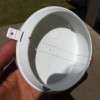
Detail of interior of Tamper Proof Lid

55 Gallon Tamper Proof Lid

Security & Quality

Replenishing your water storage within a six to twelve month period ensures that the integrity of that water remains complete and that no unwanted influences have compromised the container or the immediate storage environment.

Some authors recommend accessing the water itself and simply closing it back up if all appears alright, but I disagree. The second that the stored water is re-introduced to an outside environment such as air, tools, or hands, the potential for contamination is a done-deal. Sterile technique outside of a lab is impossible which is why I recommend using tamper-proof caps after each replenishing session. This ensures a quick visual evaluation of tampering and compromise. Rest assured, if your technique was appropriate while putting the water into storage, routine replenishing and repeated form will ensure continued success. I also recommend writing the date of storage on each tamper-proof cap as a universal reference point.

Tamper Prood Lid with Fill Date

The quality of the water is always affected by appropriate storage conditions:

  • Using appropriate sources of water (U.S. tap water approved for drinking is a minimum)
  • Using virgin (new & unused) containers approved for water storage
  • Appropriate water preservative considering container & environment
  • Proper filling & sealing techniques
  • Out of direct sunlight
  • Away from exposure to extreme temperatures

For those individuals who would rather add more preservative to the water within the replenishing time-frame, I suggest that you do the following (at your own risk of course):

  1. Minimize access to outside environments and factors such as winds, dust, chemicals, tools, etc.
  2. Operate in a clean environment:
    1. Clean hands, tools, sanitizing solution appropriate for contact with drinking water storage
    2. Perform a visual inspection of critical areas:
      1. Caps, gaskets, access points, container, storage location, supports, covers, etc.
      2. Once you’ve determined that you wanna take a shortcut, clean each critical area before re-storing your water.

Optimize Resources

Replenishing your water storage within a six to twelve month period also ensures that your water, container(s), and tools, are kept in optimum operating conditions. Successful bakers, chefs, mechanics, soldiers, and healthcare practitioners function best when their tools are in ideal shape…the same is true for you and for me.

Optimizing the lifespan of our resources is valuable because it saves us money long-term. I am consistently surprised at would-be home economists who brag about their ability to “prep on the cheap.” I agree that frugality should be practiced but not at the expense of becoming CHEAP! By cheap, I mean the practice spending a little money to buy as many products of inferior quality as possible than in spending more money to buy better or best quality products which likely will not need to be replaced. Those who act cheap cannot appreciate terms such as craftsmanship, lifetime manufacturer warranty, or even conduct real cost analyses! How to conduct a practical cost analysis will be the subject of a separate post.

In order to make the most of your resources, pursue these practices:

  • Read the instructions & owner’s manual!
  • Understand how to appropriately use your product
  • Understand your product’s limitations
  • Learn how to maintain your product in ideal operating condition
  • Gather information and feedback from others who parallel you & your use of the product
  • Contact the dealer/manufacturer for product support
  • Establish a routine to maintain your product

Routine of Integrity

Properly maintaining your resources is a fundamental behavior that optimizes the life span of your tools (in this case water), refreshes your operating knowledge base (where & when to access it), and promotes improvisation when access to familiar resources is cut-off (alternative access to water & water filtration/purification). Habit is a synonym for the word routine, and denotes behaviors or customs that develop with repeated application. In this case, the habit or routine of integrity is a function of reviewing your water storage and making adjustments to ensure its optimum availability.

Within the context of establishing a routine, here are some personal steps that I take in my routine:

  • Monthly visual inspection
  • Routine cleaning of storage area
  • Routinely adding to the water storage where possible
  • For the last couple of months leading up to replenishment, I use the remaining water or place it into smaller containers for use within an appropriate time-frame.


-David SafeWater

Featured Post: The Complete Pictorial Guide to Quick Soaking Beans

I came across an awesome article by Angela from FoodStorageandSurvival.com. It offers a cool tip I never knew…until now! Enjoy!

Sometimes when I want a meal with beans I remember the day before and soak my beans overnight.  But sometimes I forget to get the beans soaking and remember in the late morning on the day I want to have the ham and bean soup that my beans need soaked.  Thank goodness there’s a method for quick soaking beans!  So if you’ve ever needed or wanted to soak your beans a little faster, here’s how to do it.

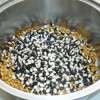
Step 1: Sort and rinse your dry beans to get rid of any rocks or dirt or twigs that may be hanging around in them, then put your clean dry beans in a pot.  These are Calypso beans and Hutterite Soup beans from our garden.

Step 2: Cover the beans with about 3 times as much water as beans.

Step 3: Turn the stove on and bring the water to a boil.  Let it boil for 2 minutes.

Step 4: Turn the stove off, cover your pot, and let it sit for 1 hour.

Step 5: Discard the soak water (you can water your plants with it if you feel like you’re wasting the discard water).  Your beans are now ready to cook as if they had soaked all night.

So you can have ham and bean soup using dry beans even if you don’t think about it until 11 am the day you want to eat it!  Just do a quick soaking on those beans and get them cooking fast.


Thanks for the tips Angela!

SOS: Thoughts on Italy’s Costa Concordia’s Capsizing

The tragedy in Italy this weekend has definitely shaken many individuals who will be traveling on cruise ships, no doubt. While we are awaiting the causative details of this tragedy, we already know that Captain Francesco Schettino had deviated from the ship’s charted course. Five fatalities are the current count as of this writing, with many more injured amongst the 4,000 passengers and crew. Our thoughts and prayers are with the families of those whose hearts are grief-stricken from this event.

I, for one, have been curious since the unfolding of this accident, as to how one might be prepared for having to abandon ship? What should I consider in such an event and what kinds of unique supplies would enhance my EDC on a cruise? Here are the main points of what I have found, but please continue your studies to fit other potential situations:

  1. Be sure to have the appropriate PFD (Personal Flotation Device) secured & worn properly.
  2. Be sure to have an EPIRB (Emergency Positioning Indicator Radio Beacon) with you whenever you’re out on open waters, and activate it immediately when abandoning ship is imminent.
  3. Grab the “ditch-bag” if possible, as well as any other flotsam (potentially useful objects) before evacuating, if possible…i.e. fresh water/filter/purifier
  4. Secure a safe distance from the sinking vessel within a life-raft/dinghy.
  5. Assist other victims as possible.
  6. Maintain calm & gather available resources. This includes provisions & means of shelter to reduce exposure to the elements.
  7. If with others, establish clear communication & priorities.
  8. Assess & continually reassess provisions, situation, & opportunities.
  9. Don’t lose hope, maintain morale.
I found some sites that address these topics (clicking the topic will open a new tab/window for direct access to the referenced source).

navcen.uscg.gov


-TBG


A Personal Lesson on Preparedness

I participated in the Boy Scout program when I was a teenager and enjoyed many experiences in that program. Of course, we camped out alot and played tons of Capture the Flag. I also had a few experiences which underscored the value of preparing for the unknown, especially unanticipated severe weather.

One particular troop outing comes to mind. In all my preparation before the event I had momentarily considered packing some gear other than the light snow gear I had in my pack. I did not take my wool gloves because I didn’t think they’d be necessary. Boy was I wrong. I was also wrong about carrying less food because I wanted a lighter pack.

Fog

photo credit: georgeruns

The day came that we arrived at our drop-off point and began our hike through the valley and up the mountains. Almost 4-6 hours into our hike, the winds began to pick up and and the temperature began to drop. It was no later than 2 pm but the visibility was cut because of a haze forming. Within 20 minutes the weather completely darkened, bringing with it torrential rain. For a large portion of those 20 minutes we could not decide if we should continue up the trail in hopes of finding a good location for shelter, or if we should bunker down where we were. It turned out that we wasted critical time because of indecision. By the time we could proceed no further, we were already wet, winds were moving fast, and we were somewhat disoriented. We frantically labored to throw up our tents but the winds seemed to mock our efforts.

Eventually, we were able to shelter ourselves but the storm continued to pound upon us as we shifted gear inside the tents, working to prevent the walls from bearing down upon us. My buddy and I began eating some of our foods because our frantic energy expenditures had left us shaking for warmth. It is now clear that our bodies were following their natural inclination to create warmth by muscle spasms. Such shaking was taking its toll on our ATP and so food was necessary to replenish our energy levels.

I had successfully changed into dry clothes although the inside of my tent was a bit wet. I can still recall that my hands began to itch and my fingers ached terribly. The storm continued to rage on beyond 6 pm, although one might have guessed that it was already midnight. We were stuck.

Two more hours passed. It was now 8 pm and the storm continued its menacing fury. My hands still hurt and nothing seemed to provide enough warmth. I remember thinking to myself that I was possibly experiencing frostnip. The redness in their color had changed to a hint of purple and the fine motor control of my fingers was concerning to me. I recall that at some point, I had held a very hot cup of hot chocolate in my hands and was unable to feel the heat. I don’t remember how I stopped holding the cup because I should have sustained a burn from its heat.

***

Our group endured the freezing rain and at the first sign of light in the morning, one of our leaders hiked out to the ranger’s location to radio for rescue. A few hours later a SAR team arrived and helped us make it back to safety, outside of the storm which continued over the next couple of days.

I can still recall how grateful I was to smell  the Egg McMuffins and hash browns that were awaiting us in the vehicles there to pick us up. After brief medical check-ups by the medics there, we headed back home with a story to share with our families.

That experience gave me the practical knowledge that having a lighter pack is not always the wisest solution, especially at the expense of adequate preparedness. I also learned that I should follow my adventurer’s gut instincts a little better. I should have taken my wool sniper gloves with me which would have helped in retaining heat, although the wool would have been wet.

In another post, I’ll share my experience in the Sierra Nevada mountains with a friend’s exposure to hypothermia. He shouldn’t have tried walking on that frozen lake. He nearly died.


Featured SnoMan Article: 1-Day Emergency Plan

The following article is featured from our friend SnoMan @ SurvivalNewsOnline.com. Enjoy!

You can be ready for emergencies in just one day

I know tons of people who haven’t prepped because they have big plans and just can’t seem to get started. If you’re one of those people, this plan is for you. Follow these 10 easy steps to get ready for an ice storm, a blackout, or an economic meltdown. Just a few hours’ work can make the difference between life and death.

This is not by any means a complete survival plan — it’s just a list of items that will get you more prepared than you would be if you do nothing. This plan is designed to get you prepped today, because you never know what might happen, or when. So it’s quick, easy, and cheap.

Most of these items can be found at Wal-Mart, Sam’s Club, or Costco. Feel free to make adjustments as necessary, depending on your circumstances. Like, if you have a year-round spring, stocking water jugs might not be your top priority, and if you have a large family, maybe increase the quantities. (Incidentally, these items are not necessarily in order of importance).

  1. Buy 3 to 5 six-gallon water jugs and fill them as soon as you get home. You can find these in the sporting goods section.
  2. Get 20 lbs each of beans and rice. You can get detailed about your food stock later (how to build up a one year food supply). Right now, we’re just getting you some basic food so you don’t starve.
  3. Canned fruits and vegetables. Just get 20 cans of each, and make sure you’re buying stuff you’ll be happy to eat.
  4. Canned meat and fish. Get 20 cans of Spam, tuna, salmon, jack mackerel, beef stew, or any combination of these.
  5. Chocolate and peanut butter. They store well, they provide tons of calories, and they’re great for morale. Get about 5 lbs of peanut butter and a couple or 3 lbs of chocolate.
  6. Multivitamin supplement. You should have several hundred doses — say, a year’s supply.
  7. Ammo. Make sure you have a few hundred rounds for your primary defensive weapon (I don’t know… 200 to 500, maybe?), and 50 to 100 rounds for your primary hunting weapon.
  8. Flashlight and batteries. LED flashlights use less power, so they last longer. Also, candles and lighters.
  9. Firewood. Just get a pickup load and have it on hand. You can cut more later, but you need some right now. If you don’t have a fireplace or wood stove, get a kerosene or propane space heater — and fuel, of course.
  10. Battery-powered radio. When you get home, tape a new pack of batteries to the radio, then stow the lot with your emergency supplies.

Print this off, go to the store, and be ready for 2012.

~SnoMan

The Survival Podcast interviews The Berkey Guy

Click the banner & listen to the interview @ the TSP

Jack Spirko interviewed our very own Jeff “The Berkey Guy” Gleason this week on The Survival Podcast (TSP). The interview covered the subject of drinking water (big surprise?) including the issue of fluoride in your drinking water and a reference to The Fluoride Deception by Christopher Bryson. We urge you to take a read of the book if you haven’t already. Chlorine, arsenic, radiation, and chromium were also touched on in the interview. Jeff had a blast doing the interview especially because The Survival Podcast community is a valued audience who supports Directive21.com and he was finally able to thank them in that podcast.

The Survival Podcast is committed to “helping you live the life you want, if times get tough, or even if they don’t.” We are happy to continue to support Jack’s efforts, especially his Member Support Brigade (MSB). If you listen to TSP but haven’t become part of the MSB, be sure to join & take advantage of  connecting with other like-minded folk. MSB members enjoy many benefits including discounts on prepper & survival products, free downloads, and tons of valuable information!


New Product: EverSafe Emergency Auto Kit

We recently added a new product to our site. The EverSafe Emergency Auto Kit makes a wonderful solution for your vehicle’s Emergency Preparedness. Weighing in at over 21 pounds, this kit is designed with the seasons in mind. With over 25 different products, it comes with items ranging from emergency calorie bars to a fire extinguisher and safety reflective vest, even an LED flashlight multi-tool!

Currently, kits for automobiles in the marketplace are  limited in what they offer and not geared for all types of weather. In designing this kit, we made it a priority to include tools & items that are commonly needed in a vehicle emergency such as getting stranded during a snowstorm, the car battery dying,  or waiting for road-side assistance or the tow-truck to show up. Come rain, shine, snow, or mud you will be better prepared with the EverSafe Emergency Auto Kit.


-The Berkey Guy


Welcome to Subscribers of KeeperoftheHome.org!

June 20, 2011 Educational No Comments

We are pleased to support Stephanie @ Keeperofthehome.org in spreading the word about Berkey Water Purification Systems, such as the Sport Berkey Portable Water Purification System. She’s giving (2) Sport Berkey Portable Water Purification Bottles away (they’ve got filters inside) to the (2) lucky winners that she chooses. Click HERE for more details.

All too often, clean drinking water is taken for granted. The water flowing from your tap may not be the ideal for your health or the health of your loved ones.

I always recommend knowing what is in your water supply. This is public information and unfortunately, most residents are unaware that water quality reports are available to the public which it serves.

Did you know that water utilities must test their water processes and facilities several times an hour? Even so, boil alerts are constantly occurring throughout the U.S. alone!

Be sure to ensure that your emergency drinking water supply is:

  • replenished every 6-12 months
  • strategically placed, and
  • readily accessible

Minimum daily requirements to maintain adequate hydration levels for an adult is approximately 64 ounces or 1/2 gallon of water a day. In general, an adult should be consuming 1/2 gallon of water a day. A portion of the daily water content can be consumed via fruits and vegetables, as well as juice and other foods. Individual requirements may vary, so please consult your local healthcare practitioner for specific advice.

Stephanie has great resources available on her site…for FREE! Access them HERE.

-The Berkey Guy

Welcome to The Berkey Guy’s Blog!

I’d like to extend a cordial welcome to you! We look forward to providing you with great information to help you on your way to achieving greater self-reliance and peace. Please subscribe to our RSS feed and you will automatically receive updates as we make content available here. By subscribing, you will also receive a free subscription to the The Berkey Guy Newsletter, sent out twice a month. Our newsletter contains special offers that we only provide to our subscribers. And as always, your email and contact information remains safe with us and nobody else. We will never sell, trade, grant access or provide your information to anyone. Period.

You will notice many exciting things in the months to come, so stay tuned and please feel free to offer your comments here, Like Us on Facebook, Follow Us on Twitter, and Visit Us on Youtube!

If you would like to submit an original article or would like to see an article about a particular subject, please email us & let us know @:   blogarticle@directive21.com.


Thanks,

The Berkey Guy

Bullets and Beans: Consideration of Priority & Being Practical

Facts & motives are powerful catalysts to action and must be weighted in moderation.

Over the years, customers call in and ask some interesting questions. An infrequent question recently surfaced when I had a conversation with an individual who decided to pick my brain about almost all-things-preparation. To paraphrase her question, she asked, “I have a 72 hour kit and because I live in [in a densely populated U.S. metropolis] I think I really need a gun…what do you recommend?” Here are some of our thoughts with respect to setting priority in steps toward greater self-reliance. My recommendations can be summed up in one word: Practicality.

It is too easy to get side-tracked in our preps when there are so many areas that seem appealing and meritorious of highest priority status. Newbies and old-timers alike can easily find themselves concentrating in many areas of detail such as:

  • Should I raise a Barnevelder or Brahma variety of chickens?
  • Should I start off with a handgun, rifle, or shotgun?
  • What are the criteria I should employ in choosing a brand of colloidal silver?

To avoid this analysis-paralysis one must remain focused and concentrate on building the basics. There is the idea of utilitarianism which essentially declares: do the greatest amount of good for the greatest amount of people. In the particular case of the individual I spoke with, what was most practical for her and that which would accomplish the greatest good was working on her food and water storages. She, like many, was lacking in her practical preps. In her mind, she was most concerned about the first 72 hours post-incident. She anticipated that those 72 hours might require the use of a firearm for protection from looters and vandals. Indeed, I don’t discredit the manifest potential of her scenario, but ultimately, bullets aren’t beans. In other words, hydration, energy, & nutrition are life-sustaining priorities that will provide the stability and foundation, upon which she can progress to personal/group safety considerations.

I know an individual who is intent upon improving his marksmanship in close-quarter combat as well as “reaching out to touch someone.” No problem. Range time is fun. However,he has no medical preparations, horrible social skills, and lives in a crowded apartment building. For him, one practical need is to become more sociable and learn to interact with others, so he can create & strengthen his support network. The support network is the second-point of emphasis that I shared with my friend during our conversation. It is completely do-able and necessary for individuals to strengthen ties & relationships with trusted & like-minded individuals whose interests are shared. While you are building your supplies and hardware inventories and learning self-reliant skills, specialization in interpersonal communication and conflict resolution/negotiations is an ability that is priceless. It can be learned and improved upon no matter your degree of experience and comfort level. Individuals who develop these skills are able to understand human behavior much better and are in a powerful position to act appropriately with/without weapons training & availability.

Beans represent food.

In the interest of time & to keep this post short, I offer this summary. Bullets (security measures) prove valuable in hunting, defense, and offense. Beans (food) sustain life and are the fuel to simple survival and being able to weather the storm during a sustained power outage. Get your beans & then your bullets, or get them both together.

-The Berkey Guy

Please share your thoughts & feedback in our comments section below. Also, feel free to Like Us on Facebook, Follow Us on Twitter, and share your thoughts on the blog.